Wheat Porridge (Dalia) in Pakistan: Benefits, Uses, and Buying Guide
Wheat porridge, known as dalia in Pakistan, has long been a go-to breakfast for families looking for something light, filling, and easy to digest. Often recommended during recovery from illness or for growing children, dalia deserves more attention as an everyday health food, not just an occasional dish. This guide covers its nutritional value, health benefits, and how to prepare it well.
What Is Wheat Porridge (Dalia)?
Wheat porridge is made from cracked or coarsely ground whole wheat grains, cooked in water or milk until soft. Unlike refined wheat flour, dalia retains the bran and germ of the wheat grain, giving it a noticeably higher fiber and nutrient content along with a distinct, slightly chewy texture.
Nutritional Profile of Wheat Porridge
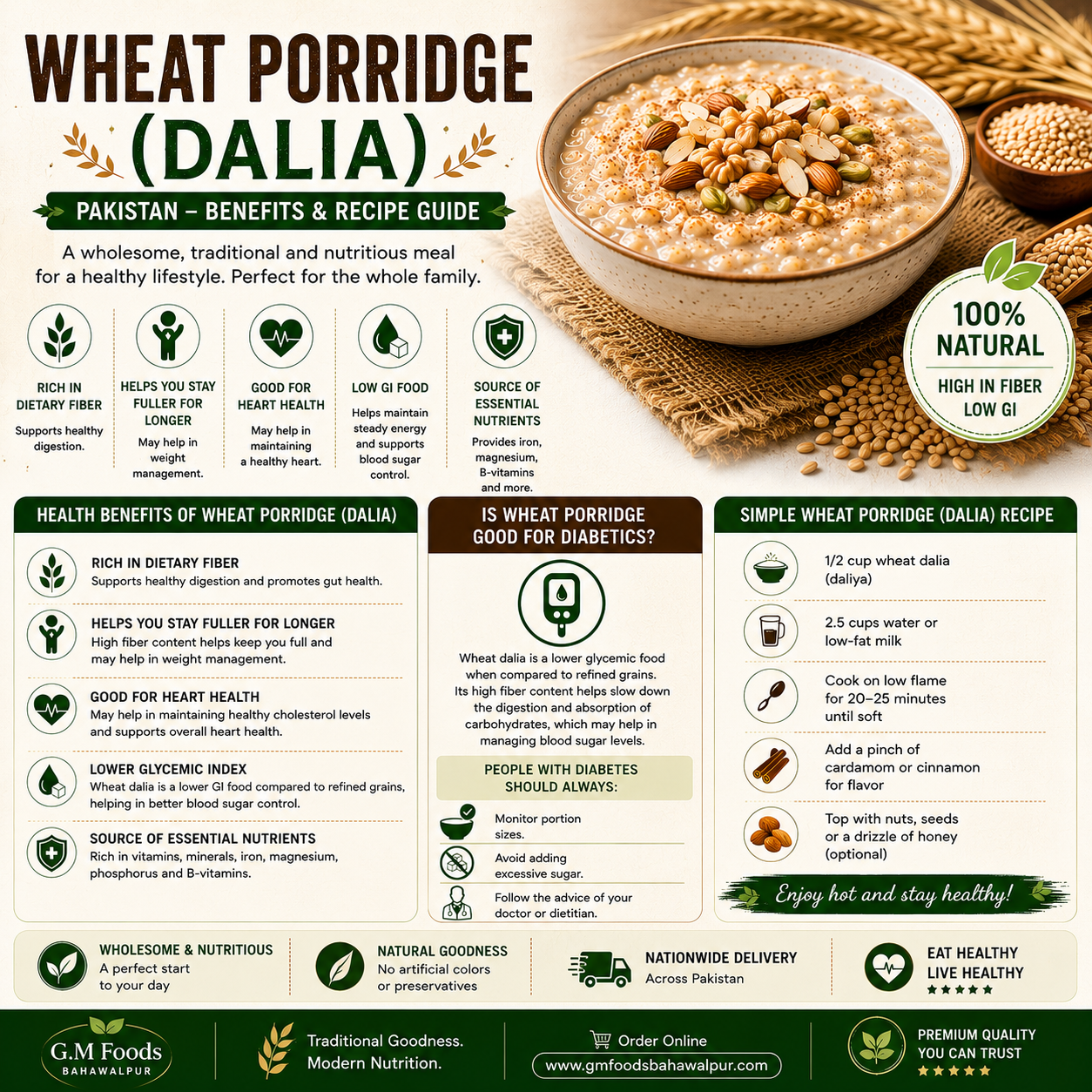
- High in dietary fiber – due to the retained bran, supporting digestive health
- Good source of complex carbohydrates – providing steady, sustained energy
- Contains plant-based protein – contributing to daily protein needs
- Rich in B vitamins – including niacin and thiamine, important for energy metabolism
- Contains minerals – such as iron, magnesium, and zinc, retained from the whole grain
Health Benefits of Wheat Porridge
- Easy digestion – the soft, cooked texture makes it gentle on the stomach, which is why it is often recommended during recovery from illness
- Blood sugar management – the high fiber content slows glucose absorption compared to refined grain products
- Weight management support – fiber and complex carbohydrates promote fullness, helping control portion sizes and cravings
- Sustained energy – ideal as a breakfast option since it provides a steady energy release rather than a quick spike and crash
- Digestive regularity – the fiber content supports healthy bowel function
Why Dalia Is a Popular Recovery Food
In Pakistani households, dalia is often the first solid food given after an illness, particularly digestive upsets or fever. This tradition has some nutritional basis: the soft, well-cooked texture is easy on a sensitive stomach, while the wheat grain’s natural nutrients help rebuild energy without overwhelming the digestive system. It is also commonly given to babies and young children as an early solid food due to its gentle texture and nutrient density.
Common Ways to Prepare Wheat Porridge
- Sweet dalia – cooked with milk, sugar, and dried fruits or nuts, a popular breakfast option
- Savory dalia – cooked with vegetables, light spices, and sometimes lentils, similar to a khichdi
- Plain dalia with yogurt – a simple, easily digestible combination often given during recovery from illness
- Dalia for babies – cooked to a very soft consistency and blended smooth as an early weaning food
Basic Method for Cooking Wheat Porridge
- Rinse the dalia briefly to remove any loose bran dust
- Optionally dry roast it in a small amount of ghee for a few minutes before adding liquid, this enhances flavor and aroma
- Add water or milk in a ratio of roughly three to four parts liquid to one part dalia, adjusting based on desired thickness
- Simmer on low to medium heat, stirring occasionally, until the grains soften completely, usually 15 to 20 minutes
- For sweet versions, add sugar, cardamom, and dried fruits toward the end of cooking. For savory versions, sauté vegetables and spices separately and combine once the dalia is soft
What to Look For When Buying Wheat Porridge
- Consistent grain size – for even cooking and predictable texture
- Whole grain content – ensuring the bran and germ are retained rather than heavily refined
- Hygienic processing certification – confirming the product was processed and packed under verified food safety standards
- Clean, fresh appearance – free from dust, discoloration, or signs of pest activity
- Proper packaging – protecting against moisture and contamination during storage
Storage Tips for Wheat Porridge
- Store in an airtight container to prevent moisture absorption and pest exposure
- Keep in a cool, dry place away from direct sunlight
- Because it retains the wheat germ’s natural oils, buy in quantities you will use within a few months for the best freshness
- Check periodically for any signs of moisture or pests, especially in humid climates
Choosing a Trusted Wheat Porridge Brand in Pakistan
Since dalia is often given to children, the elderly, and those recovering from illness, hygiene and quality matter more than usual. Prioritize brands that:
- Use whole grain wheat without unnecessary refining
- Hold recognized food safety certification
- Package the product to protect against moisture and contamination
- Have genuine customer reviews confirming consistent quality and freshness
GM Foods Bahawalpur’s Wheat Porridge (Dalia) is processed from quality whole wheat grain and hygienically packed under Punjab Food Authority certification, offering a reliable, nutritious option for daily breakfasts, family recovery meals, and early weaning foods for babies.
Frequently Asked Questions
Is wheat porridge the same as oatmeal? No. Oatmeal is made from oats, while dalia is made from cracked whole wheat. Both are whole grain porridges but come from different grains with slightly different nutritional profiles and textures.
Is dalia suitable for babies? Yes, it is commonly used as an early weaning food in Pakistani households, typically cooked to a very soft consistency. It is best to consult a pediatrician regarding the appropriate age and preparation for introducing solid foods.
Can dalia be eaten daily? Yes, it can be part of a regular, balanced diet, offering fiber and sustained energy suitable for daily breakfast routines.
Is wheat porridge good for weight loss? Its high fiber content promotes fullness, which can support portion control as part of an overall balanced diet and healthy lifestyle.
This article is for general informational purposes. Please consult a doctor or nutritionist for advice specific to your dietary needs, particularly for infants, the elderly, or those recovering from illness.