Many people experience digestive discomfort after eating foods containing gluten, but not everyone has celiac disease. Two conditions that are often confused are Celiac Disease and Gluten Intolerance, also known as Non-Celiac Gluten Sensitivity (NCGS).
Although they may share similar symptoms, they are different conditions with different causes, diagnostic methods, and long-term health implications.
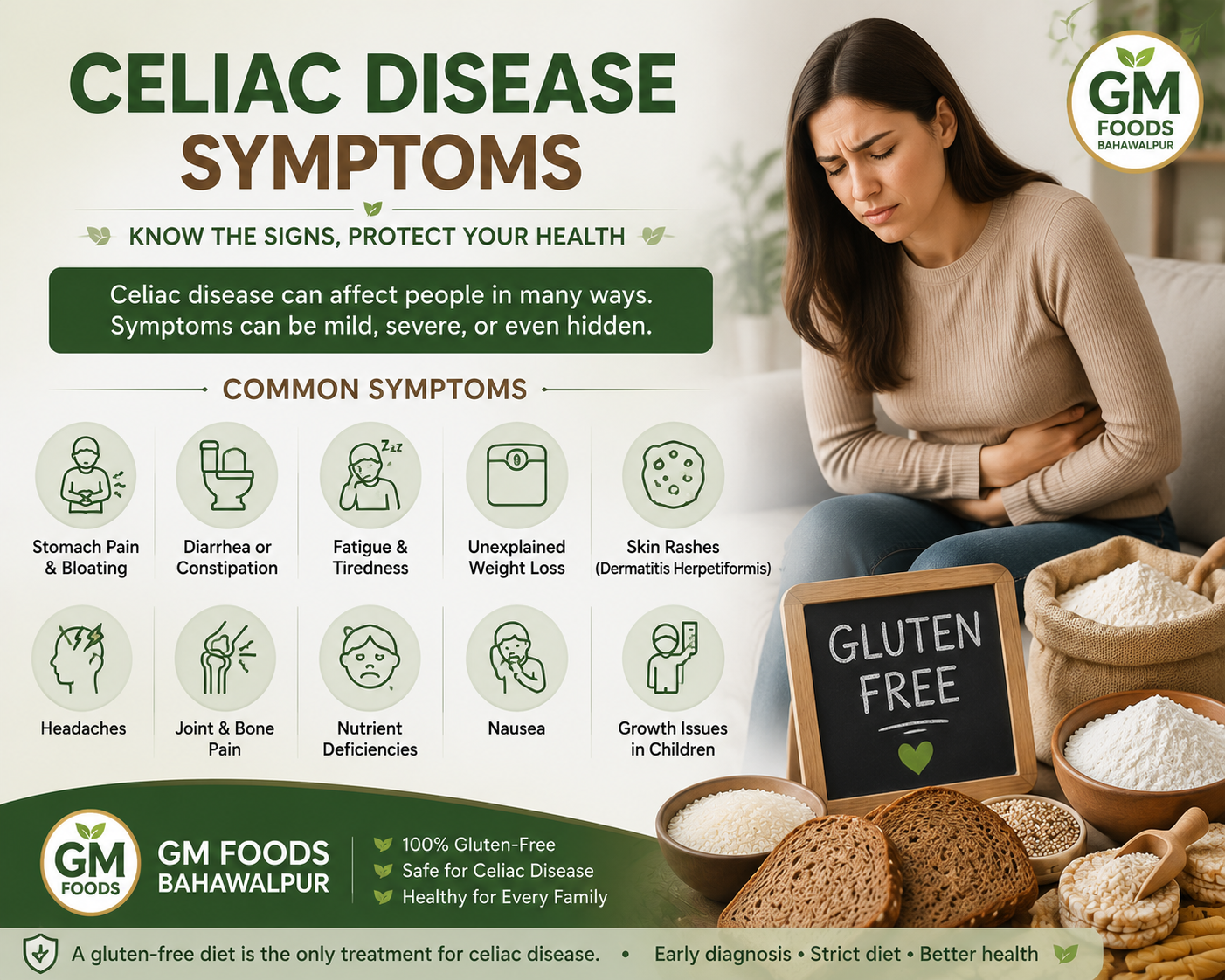
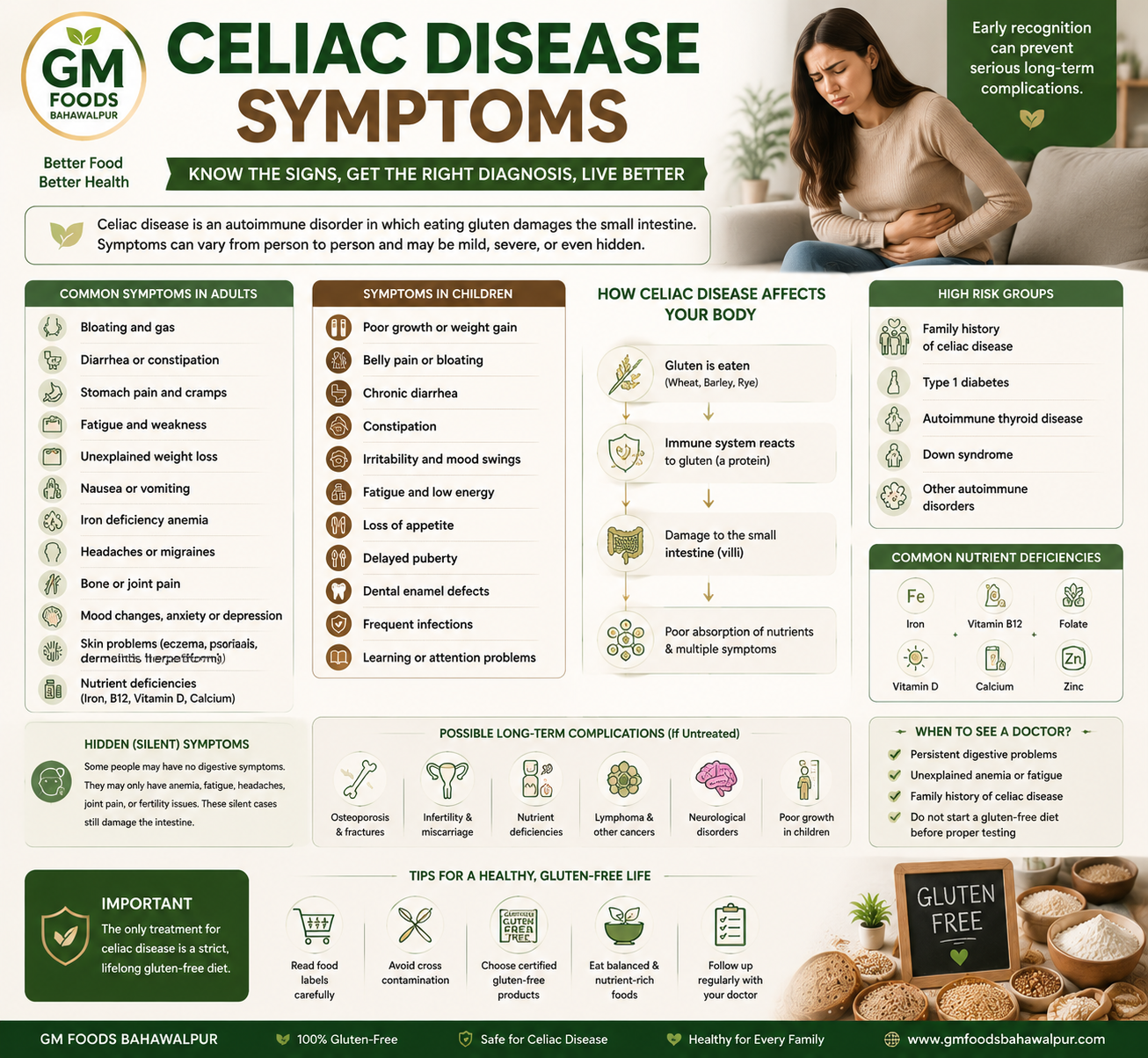
Celiac disease is a chronic autoimmune disorder. When a person with celiac disease eats gluten, the immune system attacks the lining of the small intestine, damaging the tiny finger-like structures called villi.
This damage reduces the body’s ability to absorb nutrients and can lead to serious health complications if left untreated.
Gluten intolerance, or Non-Celiac Gluten Sensitivity (NCGS), is a condition in which people develop symptoms after eating gluten-containing foods but do not have celiac disease or a wheat allergy.
Unlike celiac disease, gluten intolerance does not damage the small intestine and does not involve the same autoimmune response.
Symptoms often improve after reducing or avoiding gluten.
| Feature | Celiac Disease | Gluten Intolerance (NCGS) |
|---|---|---|
| Cause | Autoimmune disease | Gluten sensitivity (not autoimmune) |
| Immune System | Yes | No autoimmune damage |
| Intestinal Damage | Yes | No |
| Blood Tests | Usually positive | Usually normal |
| Biopsy | Often abnormal | Normal |
| Long-Term Complications | Possible if untreated | Generally not associated with intestinal damage |
| Treatment | Strict lifelong gluten-free diet | Gluten reduction or avoidance based on symptoms |
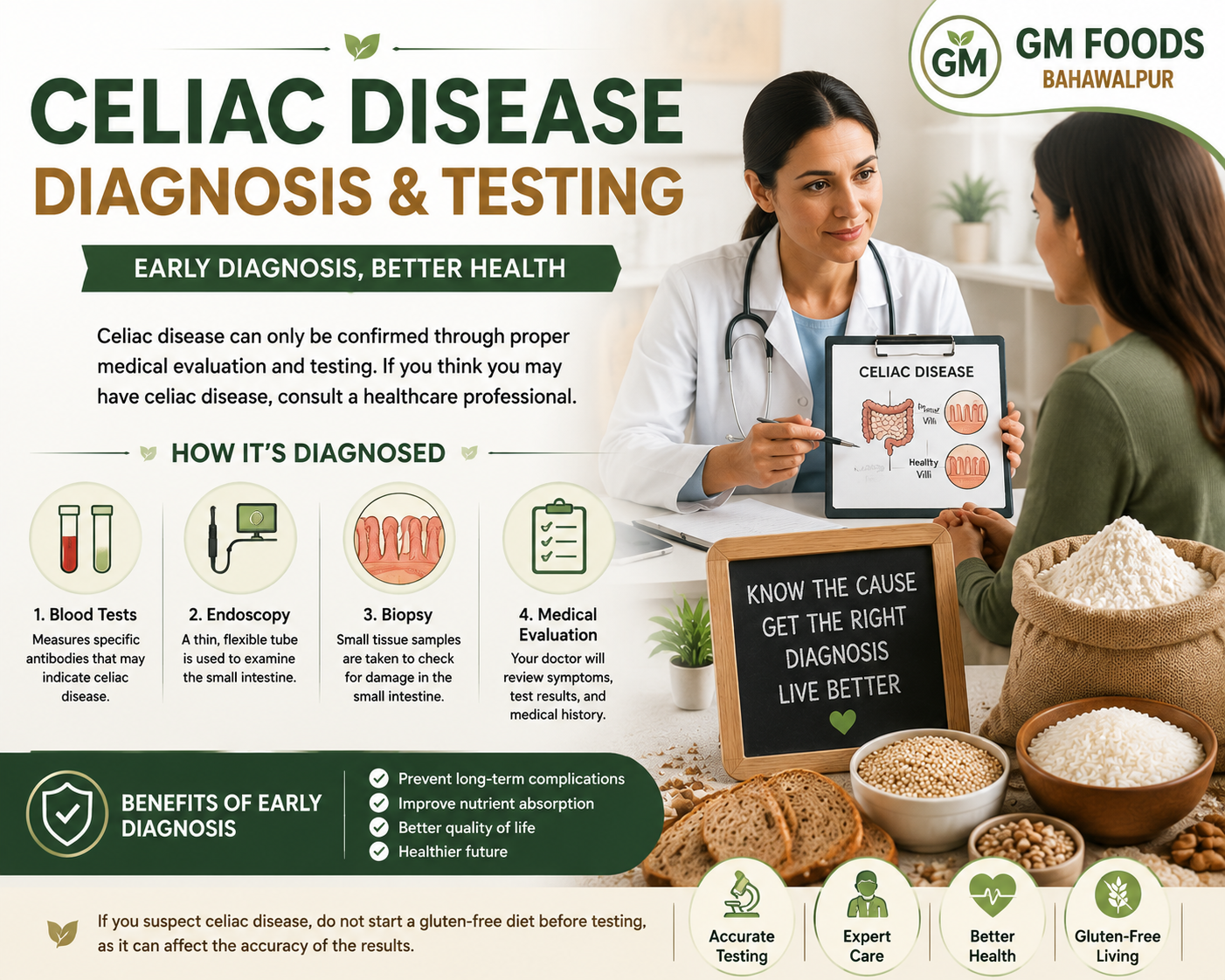
Doctors may recommend:
These tests help confirm the diagnosis.
There is currently no specific laboratory test for gluten intolerance.
Doctors first rule out:
If symptoms improve after removing gluten and return when gluten is reintroduced, gluten intolerance may be diagnosed.
Yes.
Both conditions may cause:
This is why self-diagnosis is not recommended.
Starting a gluten-free diet before medical testing may interfere with celiac disease diagnosis.
If you suspect gluten is causing your symptoms, consult a healthcare professional before changing your diet.
The only effective treatment is a strict lifelong gluten-free diet.
Even small amounts of gluten can damage the small intestine.
Treatment varies from person to person.
Many individuals feel better by reducing or avoiding gluten, but the level of restriction may differ depending on symptoms and medical advice.
No. Celiac disease is an autoimmune disorder, while gluten intolerance does not cause autoimmune damage to the small intestine.
Current evidence suggests that gluten intolerance does not automatically develop into celiac disease, but only proper medical testing can determine the correct diagnosis.
No. Gluten is safe for most healthy people. A gluten-free diet is medically necessary for individuals with celiac disease and may help some people with diagnosed gluten sensitivity.
Although celiac disease and gluten intolerance share many symptoms, they are different medical conditions. Celiac disease causes an autoimmune reaction that damages the small intestine, while gluten intolerance does not cause the same type of intestinal injury.
If you experience ongoing symptoms after eating gluten-containing foods, seek medical advice rather than self-diagnosing. Early evaluation and appropriate testing can help you receive the correct diagnosis and treatment.
GM Foods Bahawalpur is committed to raising awareness about gluten-related disorders and providing high-quality gluten-free food products to support individuals who require a gluten-free lifestyle.