Barley Porridge in Pakistan: Benefits, Uses, and Buying Guide
Barley porridge, made from cracked or coarsely ground jau (barley), is a lesser-known but highly nutritious alternative to regular wheat dalia. Traditionally valued in South Asian households for its digestive and health benefits, barley porridge deserves a place in everyday breakfast routines, especially for families managing blood sugar or looking for extra fiber. This guide covers everything worth knowing about it.
What Is Barley Porridge?
Barley porridge is made from whole barley grains that have been cracked or coarsely ground, then cooked in water or milk until soft. Like wheat dalia, it retains the bran layer of the grain, giving it a dense, chewy texture and a notably higher fiber content than more refined grain products.
Nutritional Profile of Barley Porridge
Very high in beta-glucan fiber – a soluble fiber specifically associated with supporting healthy cholesterol and blood sugar levels
Good source of plant-based protein – higher than many refined grain products
Rich in minerals – including selenium, manganese, and phosphorus
Lower glycemic index than wheat – resulting in a gentler impact on blood sugar
Contains B vitamins – supporting energy metabolism
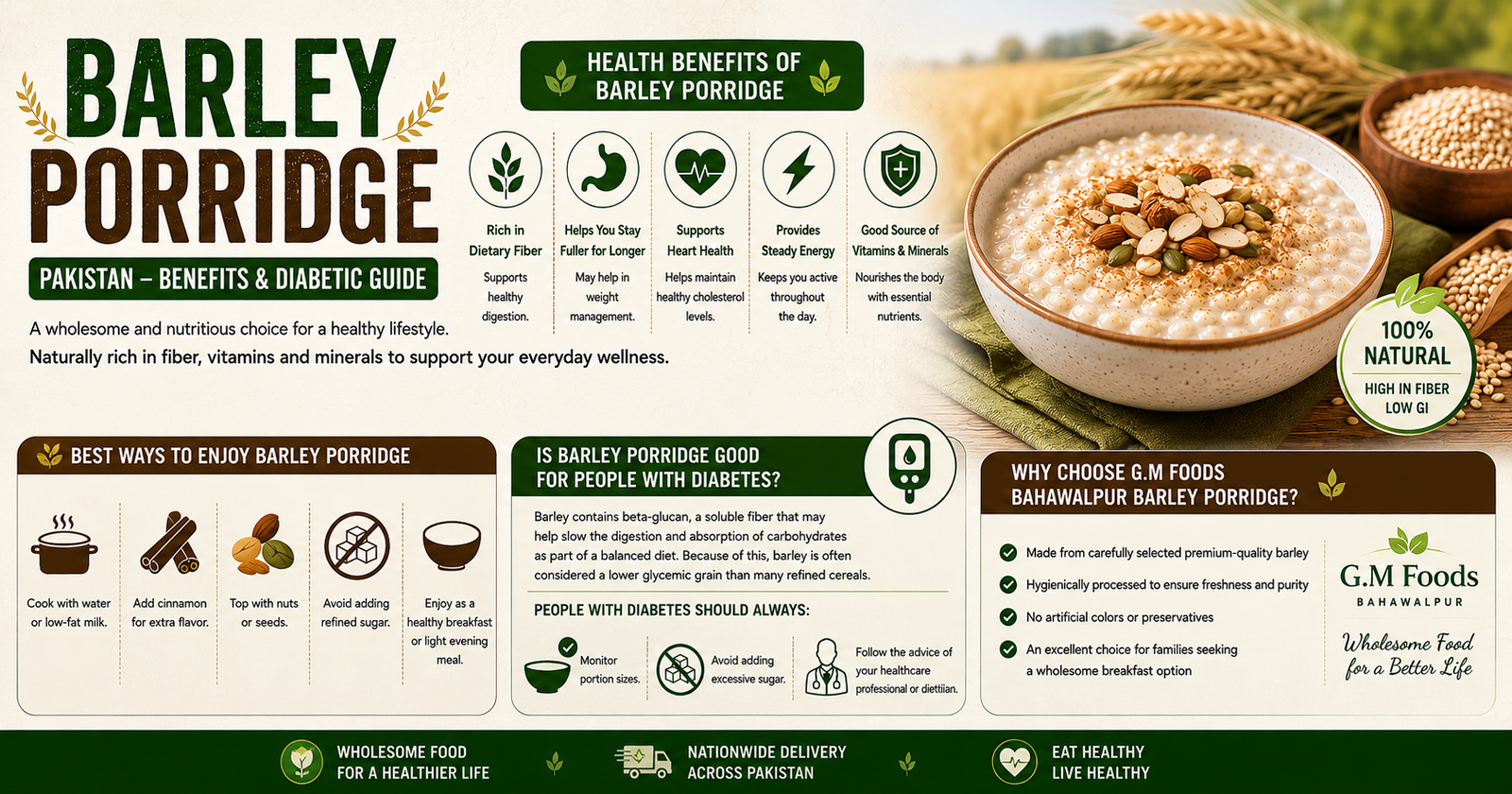
Health Benefits of Barley Porridge
Blood sugar management – beta-glucan fiber slows carbohydrate digestion, making barley porridge a useful breakfast option for people managing blood sugar levels
Heart health support – soluble fiber is well documented to help support healthy cholesterol levels
Digestive health – the fiber content supports regular digestion and feeds beneficial gut bacteria
Sustained energy – slower digestion provides steadier energy through the morning compared to refined grain breakfasts
Weight management support – the fiber and protein combination increases feelings of fullness, helping manage appetite
Barley Porridge vs Wheat Porridge (Dalia)
Factor
Barley Porridge
Wheat Porridge (Dalia)
Fiber content
Higher, especially beta-glucan
Good, but generally lower
Glycemic impact
Lower
Moderate
Flavor
Earthier, slightly nutty
Milder, more neutral
Texture
Denser, chewier
Softer
Best suited for
Blood sugar and cholesterol management
General breakfast, recovery food, weaning food
Both are nutritious whole grain options, the right choice often depends on individual health goals and personal taste preference.
Common Ways to Prepare Barley Porridge
Sweet barley porridge – cooked with milk, a touch of sugar or honey, and dried fruits or nuts
Savory barley porridge – cooked with vegetables and light spices, similar to a hearty khichdi
Plain barley porridge with yogurt – a simple, easily digestible option, particularly suited to those managing blood sugar
Barley porridge soup – cooked with vegetable or light meat broth for a warming, fiber-rich meal
Basic Method for Cooking Barley Porridge
Rinse the barley porridge briefly to remove any loose dust from the bran
Optionally soak for 20 to 30 minutes beforehand to reduce cooking time and soften the texture further
Add water or milk in a ratio of roughly three to four parts liquid to one part barley porridge
Simmer on low to medium heat, stirring occasionally, for about 20 to 25 minutes, slightly longer than wheat dalia due to barley’s denser texture
For sweet versions, stir in sugar or honey, cardamom, and dried fruits near the end of cooking. For savory versions, sauté vegetables and spices separately and mix in once the porridge has softened
Why Barley Porridge Is Often Recommended for Diabetics
The beta-glucan fiber found in barley has been studied specifically for its ability to slow the rate at which glucose enters the bloodstream after a meal. This makes barley porridge a commonly recommended breakfast choice for people managing type 2 diabetes or insulin resistance, though it should always be part of a broader dietary plan discussed with a doctor or nutritionist rather than a standalone solution.
What to Look For When Buying Barley Porridge
Whole grain processing – ensuring the bran layer, and its fiber content, is retained
Consistent grain size – for even cooking and predictable texture
Hygienic processing certification – confirming the product was processed and packed under verified food safety standards
Clean, fresh appearance – free from dust, discoloration, or signs of pest activity
Storage Tips for Barley Porridge
Store in an airtight container to prevent moisture absorption and pest exposure
Keep in a cool, dry place away from direct sunlight
Buy in quantities you will use within a few months for the best freshness and flavor
Check periodically for signs of moisture or pests, especially in humid climates
Choosing a Trusted Barley Porridge Brand in Pakistan
Since barley porridge is often chosen specifically for its blood sugar and cholesterol benefits, quality and consistency matter. Prioritize brands that:
Use whole grain barley without unnecessary refining
Hold recognized food safety certification
Package the product to protect against moisture and preserve freshness
Have genuine customer reviews confirming consistent quality
GM Foods Bahawalpur’s Barley Porridge is processed from quality whole grain barley and hygienically packed under Punjab Food Authority certification, offering a reliable, fiber-rich breakfast option for families focused on blood sugar management and overall digestive health.
Frequently Asked Questions
Is barley porridge gluten-free? No. Barley contains gluten, so it is not suitable for people with celiac disease or gluten intolerance.
Is barley porridge better than wheat porridge for diabetics? Barley generally has a lower glycemic index and higher beta-glucan fiber content than wheat, which is why it is often recommended specifically for blood sugar management, though individual responses can vary and a doctor’s guidance is recommended.
How long does barley porridge take to cook compared to wheat dalia? Barley porridge typically takes slightly longer, around 20 to 25 minutes, due to its denser texture, compared to about 15 to 20 minutes for wheat dalia.
Can barley porridge be given to children? Yes, it can be part of a child’s diet, though barley contains gluten, so it is not suitable for children on a gluten-free diet. As with any new food, introduce gradually and consult a pediatrician if you have specific concerns.
This article is for general informational purposes. Please consult a doctor or nutritionist for advice specific to your dietary needs, particularly if managing diabetes or other health conditions.