Corn Flour (Makai Atta) in Pakistan: Benefits, Uses, and Buying Guide
Corn flour, known as makai atta in Pakistan, is best known for its starring role in one of the country’s most beloved winter dishes, makai ki roti with sarson ka saag. But beyond this traditional pairing, corn flour has a wide range of uses and a nutritional profile worth understanding on its own. This guide covers what makes corn flour valuable, how to use it well, and what to look for when buying it.
What Is Corn Flour?
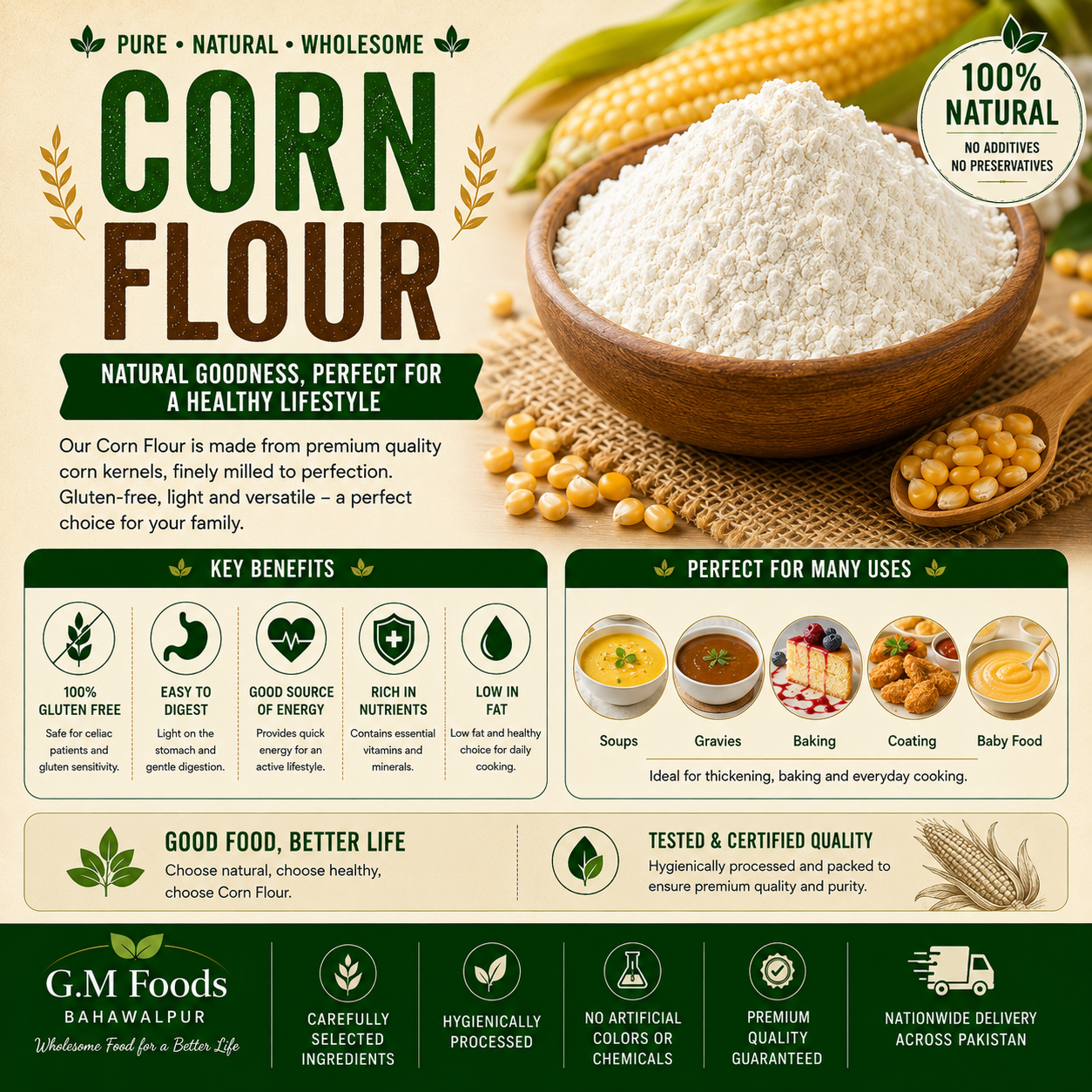
Corn flour is made by grinding whole dried corn (maize) kernels into a fine powder. It is naturally gluten-free, with a distinct sweet, earthy flavor and a slightly grainy, dense texture compared to wheat flour. It should not be confused with cornstarch, which is a highly refined starch extracted from corn used primarily as a thickener.
Corn Flour vs Cornstarch: Know the Difference
This is one of the most common points of confusion:
- Corn flour (makai atta) is made from the whole corn kernel, including fiber, protein, and nutrients, and is used for making roti, porridge, and baked goods
- Cornstarch is a purified starch extracted from corn, containing almost no fiber or protein, and is used mainly as a thickening agent for sauces, soups, and gravies
Using one in place of the other will not give the results you expect, so it is worth checking which product you actually need before buying.
Nutritional Profile of Corn Flour
- Naturally gluten-free – suitable for people with celiac disease or gluten sensitivity
- Good source of dietary fiber – supports healthy digestion
- Contains antioxidants – particularly carotenoids, which are linked to eye health
- Provides complex carbohydrates – offering steady energy release
- Contains B vitamins – including folate, important for overall metabolic health
Health Benefits of Corn Flour
- Digestive support – the fiber content helps maintain regular digestion
- Eye health – carotenoid antioxidants found in corn are associated with supporting healthy vision over the long term
- Sustained energy – complex carbohydrates provide a steadier energy source compared to highly refined flours
- Gluten-free flexibility – a useful base ingredient for people avoiding gluten, either on its own or blended into gluten-free flour mixes
Common Uses of Corn Flour in Pakistani Cooking
- Makai ki roti – the classic winter dish, traditionally paired with sarson ka saag and a generous amount of butter or ghee
- Porridge – a warming breakfast option in colder months
- Thickening curries – used in smaller quantities to add body to gravies
- Gluten-free baking – often blended with other gluten-free flours for cakes, biscuits, and bread
- Snacks – used in various fried and baked snack recipes for a distinct texture and flavor
Why Corn Flour Roti Needs a Different Technique
Since corn flour has no gluten, it does not hold together the same way wheat dough does. Traditional makai ki roti requires a specific approach:
- Use hot or boiling water when kneading, this helps bind the flour since there is no gluten for elasticity
- Knead while the dough is still warm, as it becomes crumbly and difficult to shape once it cools
- Pat the roti into shape by hand rather than rolling with a pin, since rolling can cause it to crack
- Cook on a well-heated pan or tawa and handle gently while flipping, as it is more fragile than wheat roti
What to Look For When Buying Corn Flour
- Whole grain processing – ensuring the fiber and nutrient content of the kernel is preserved
- Fine, consistent texture – for predictable results in both roti-making and baking
- Hygienic certification – confirming the flour was milled and packed under verified food safety standards
- Freshness – corn flour can lose flavor and develop off notes if stored too long, especially in humid conditions
Storage Tips for Corn Flour
- Store in an airtight container to prevent moisture absorption and pest exposure
- Keep in a cool, dry place away from direct sunlight
- Buy in quantities you will use within a few months for the best flavor and texture
- Refrigeration can help extend shelf life in hot, humid climates
Choosing a Trusted Corn Flour Brand in Pakistan
Since corn flour quality directly affects both the taste of traditional dishes and reliability in baking, prioritize brands that:
- Clearly distinguish their product as corn flour rather than cornstarch
- Use whole grain corn without unnecessary refining
- Hold recognized food safety certification
- Package the product to protect against moisture and preserve freshness
GM Foods Bahawalpur’s Corn Flour (Makai Atta) is milled from quality whole corn and hygienically packed under Punjab Food Authority certification, offering a reliable option for both traditional recipes like makai ki roti and gluten-free cooking needs.
Frequently Asked Questions
Can I substitute corn flour for cornstarch in a recipe? No, they behave very differently. Corn flour is denser and contains fiber and protein, while cornstarch is a pure starch used mainly for thickening. Substituting one for the other will change the texture and result of a recipe.
Is corn flour good for people with gluten sensitivity? Yes, it is naturally gluten-free, making it a safe option for people with celiac disease or gluten intolerance.
Why does makai ki roti crack while making it? Since corn flour lacks gluten, the dough has less elasticity. Using hot water, kneading while warm, and shaping by hand rather than rolling helps reduce cracking.
Can corn flour be used for daily meals, not just winter dishes? Yes, while it is traditionally associated with winter cooking, corn flour can be incorporated into porridge, baking, and gluten-free flour blends throughout the year.
This article is for general informational purposes. Please consult a nutritionist or doctor for advice specific to your dietary needs.