Millet Flour (Bajra Atta) in Pakistan: Benefits, Uses, and Buying Guide
Millet flour, known as bajra atta in Pakistan, has long been a winter staple, especially popular during colder months for its warming, energy-dense qualities. As interest in ancient grains and gluten-free eating grows, bajra atta is finding a place in daily meals year-round, not just as a seasonal tradition. This guide covers what makes millet flour nutritionally valuable, how to use it, and what to look for when buying it.
What Is Millet Flour?
Millet flour is made by grinding whole millet grains, most commonly pearl millet (bajra) in South Asia, into a fine powder. It is naturally gluten-free and has a distinct, slightly nutty and earthy flavor with a denser texture than wheat flour.
Nutritional Profile of Millet Flour
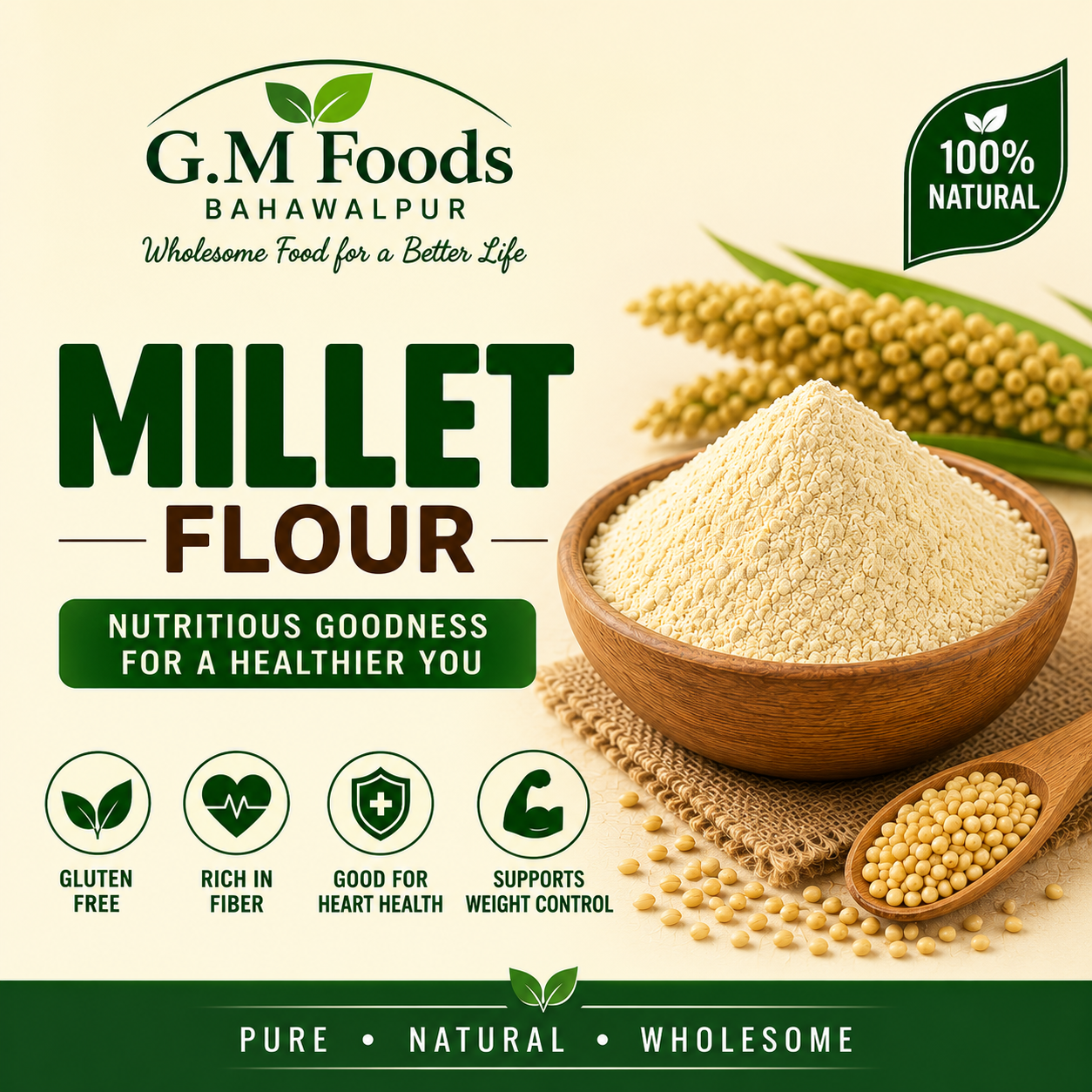
- Naturally gluten-free – safe for people with celiac disease or gluten sensitivity
- High in fiber – supports digestion and helps maintain steady blood sugar levels
- Rich in minerals – including iron, magnesium, and phosphorus
- Good plant-based protein source – contributes to daily protein needs
- Contains antioxidants – millet grains contain polyphenols that support overall cellular health
Why Bajra Atta Is Traditionally Eaten in Winter
Bajra roti has long been considered a “warming” food in South Asian tradition, often eaten during colder months paired with saag, ghee, or jaggery. Nutritionally, this makes some sense: millet is calorie-dense and provides sustained energy, which is useful during winter when the body burns more energy maintaining warmth. That said, there is no nutritional reason millet flour cannot be enjoyed throughout the year as part of a varied, fiber-rich diet.
Health Benefits of Millet Flour
- Blood sugar management – the high fiber content slows glucose absorption, resulting in a gentler impact on blood sugar compared to refined wheat flour
- Digestive health – fiber supports regular digestion and a healthy gut
- Heart health support – millet contains magnesium and potassium, minerals associated with healthy blood pressure levels
- Bone health – contains calcium and phosphorus that contribute to bone strength
- Weight management – the fiber and protein combination supports satiety, helping with portion control
Common Uses of Millet Flour in Pakistani Cooking
- Bajra roti – the most traditional preparation, often eaten with saag, curd, or ghee
- Khichdi – millet can be cooked whole or used in flour form to thicken traditional khichdi
- Porridge – a warm, filling breakfast option, particularly popular in colder weather
- Blended flours – mixed with wheat or other gluten-free flours to balance texture and nutrition
- Snacks and crackers – used in some traditional and modern recipes for a denser, nutrient-rich crunch
Why Millet Flour Is Often Blended With Other Flours
Since millet flour is gluten-free, it lacks the elasticity that makes wheat dough soft and stretchy. On its own, bajra roti can be more prone to cracking, which is why many households either:
- Use it purely on its own, accepting a denser, more traditional texture, often made slightly thicker
- Blend it with wheat flour in varying ratios for a softer, more pliable roti
- Combine it with binding ingredients like psyllium husk in fully gluten-free preparations
What to Look For When Buying Millet Flour
- Whole grain processing – ensuring maximum fiber and nutrient retention
- Freshness – millet flour contains natural oils that can turn rancid faster than more refined flours if not stored or packaged properly
- Hygienic certification – confirming the flour was milled and packed under verified food safety standards
- Fine, consistent texture – avoiding overly gritty or inconsistent grinds
Storage Tips for Millet Flour
- Store in an airtight container to protect against moisture and pests
- Keep in a cool, dry place away from direct sunlight
- Because of its natural oil content, buy in quantities that will be used within a couple of months for the best flavor
- Refrigeration can help extend shelf life, particularly in hot or humid climates
How to Get the Best Results When Cooking
- Use warm water when kneading, this helps the dough hold together better since there is no gluten to provide elasticity
- Knead gently but thoroughly, and let the dough rest for at least 15 to 20 minutes
- Shape the roti while the dough is still slightly warm, as it becomes harder to work with once it cools
- Cook on medium flame and press gently with a cloth or spatula to help it puff evenly
Choosing a Trusted Millet Flour Brand in Pakistan
Since freshness and processing quality directly affect both taste and nutritional value, prioritize brands that:
- Use whole grain millet without unnecessary refining
- Hold recognized food safety certification
- Package the product to protect against moisture and preserve freshness
- Have genuine customer reviews confirming consistent quality and taste
GM Foods Bahawalpur’s Millet Flour (Bajra Atta) is milled from quality whole grain millet and hygienically packed under Punjab Food Authority certification, offering a reliable, traditional option for households looking to enjoy the nutritional benefits of this ancient grain.
Frequently Asked Questions
Is millet flour the same as sorghum flour? No. While both are ancient, gluten-free grains commonly used in South Asian cooking, millet (bajra) and sorghum (jowar) are different grains with slightly different textures and flavors.
Can millet flour be eaten every day? Yes, it can be part of a regular diet, though variety across different grains is generally recommended for balanced nutrition.
Is bajra atta good for diabetics? Its high fiber content can help slow blood sugar spikes, making it a reasonable addition to a diabetic-friendly diet, though it should be discussed as part of an overall plan with a doctor or nutritionist.
Why does bajra roti sometimes crack while rolling? Since millet flour has no gluten, the dough lacks elasticity. Using warm water, resting the dough, and shaping it while still warm helps reduce cracking.
This article is for general informational purposes. Please consult a nutritionist or doctor for advice specific to your dietary needs.