
Before roller mills became the industry standard, every household in Pakistan relied on pathar chakki, the traditional stone grinding method, to prepare their daily atta. As more families move back toward natural, minimally processed foods, pathar chakki atta is seeing a strong revival. This guide explains what makes stone-ground flour different, why it matters nutritionally, and how to choose a genuinely good pathar chakki atta.
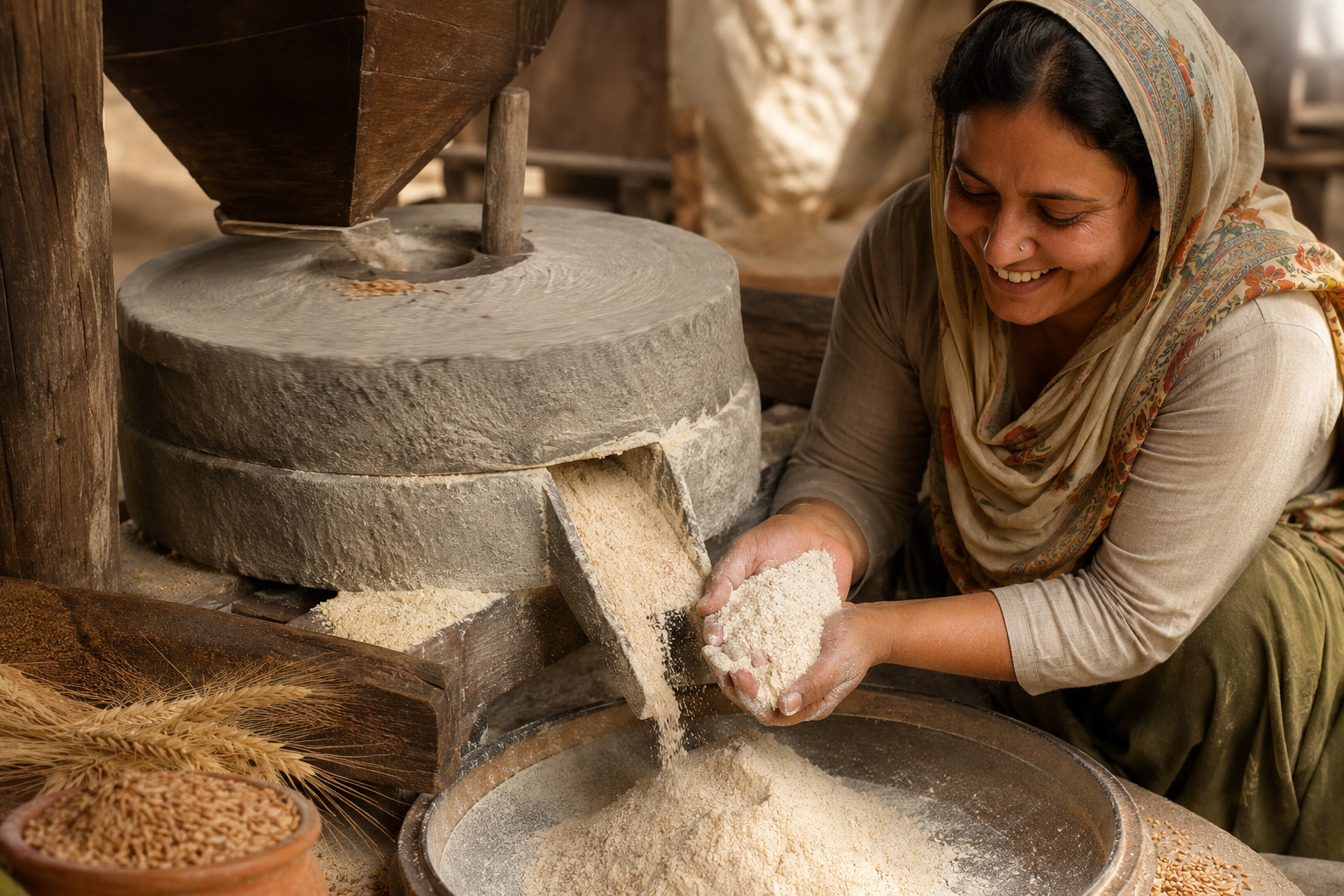
Pathar chakki atta is wheat flour ground using traditional stone mills rather than modern high-speed steel roller mills. The wheat grain passes slowly between two large stone wheels, crushing it at a much lower speed and temperature than mechanized roller milling.
This slower, cooler grinding process is the key difference, and it affects everything from nutrition to taste.
| Factor | Pathar Chakki (Stone Ground) | Roller Mill (Modern) |
|---|---|---|
| Grinding speed | Slow | Very fast |
| Heat generated | Minimal | Higher, due to friction |
| Bran and germ retention | Mostly retained | Often partially or fully removed |
| Nutrient preservation | Higher, due to low heat | Lower, heat can degrade some nutrients |
| Texture | Slightly coarser, more natural | Finer, more uniform |
The lower heat generated during stone grinding helps preserve heat-sensitive nutrients and natural oils in the wheat germ, which are more likely to degrade under the friction and heat of high-speed roller mills.
Not every product labeled “pathar chakki” is actually stone-ground using traditional methods. Before choosing a brand, check for:
Because stone-ground flour retains more of the wheat germ’s natural oils, it can be more sensitive to storage conditions than heavily refined flour:
Since the term is widely used but not always accurate, prioritize brands that:
GM Foods Bahawalpur’s Pathar Chakki Atta is produced using traditional stone-grinding methods and is hygienically packed under Punjab Food Authority certification, aiming to bring the authentic taste and nutritional profile of old-style atta to modern households.
Is pathar chakki atta the same as whole wheat atta? They are closely related but not always identical. Pathar chakki refers specifically to the grinding method, while whole wheat refers to using the entire grain including bran and germ. Most quality pathar chakki atta is also whole wheat, but the term itself describes how it was ground, not just what parts of the grain were used.
Does pathar chakki atta taste different from regular atta? Yes, many people notice a richer, more traditional flavor and a slightly coarser texture compared to finely milled roller flour.
Is pathar chakki atta healthier than regular atta? It generally retains more fiber, natural oils, and heat-sensitive nutrients due to the low-heat grinding process, making it a more nutritionally complete option compared to heavily refined roller-milled flour.
How long does pathar chakki atta stay fresh? Because it retains natural wheat germ oils, it is best used within a reasonable timeframe and stored in a cool, dry, airtight container to maintain freshness.
This article is for general informational purposes. Individual dietary needs vary, please consult a nutritionist or doctor for personalized advice.