Rice Flour in Pakistan: Uses, Benefits, and Buying Guide
Rice flour has quietly become one of the most versatile ingredients in Pakistani kitchens, used everywhere from crispy snacks to gluten-free cooking. Yet many people only know it as an occasional ingredient rather than understanding its full range of uses and benefits. This guide covers everything you need to know about rice flour, from its nutritional profile to how to use it well at home.
What Is Rice Flour?
Rice flour is made by grinding rice grains, either white or brown rice, into a fine powder. Unlike wheat flour, it contains no gluten, which makes it naturally suitable for people avoiding gluten, and gives it a distinct texture that behaves differently in cooking and baking.
White Rice Flour vs Brown Rice Flour
- White rice flour is made from polished rice with the bran and germ removed. It has a finer texture, milder taste, and longer shelf life, making it ideal for delicate dishes and smooth batters.
- Brown rice flour is made from whole grain rice, retaining the bran and germ layer. It has a slightly nuttier flavor, coarser texture, and higher fiber and nutrient content compared to white rice flour.
Both have their place in the kitchen, the right choice depends on the dish and the nutritional priority.
Nutritional Profile of Rice Flour
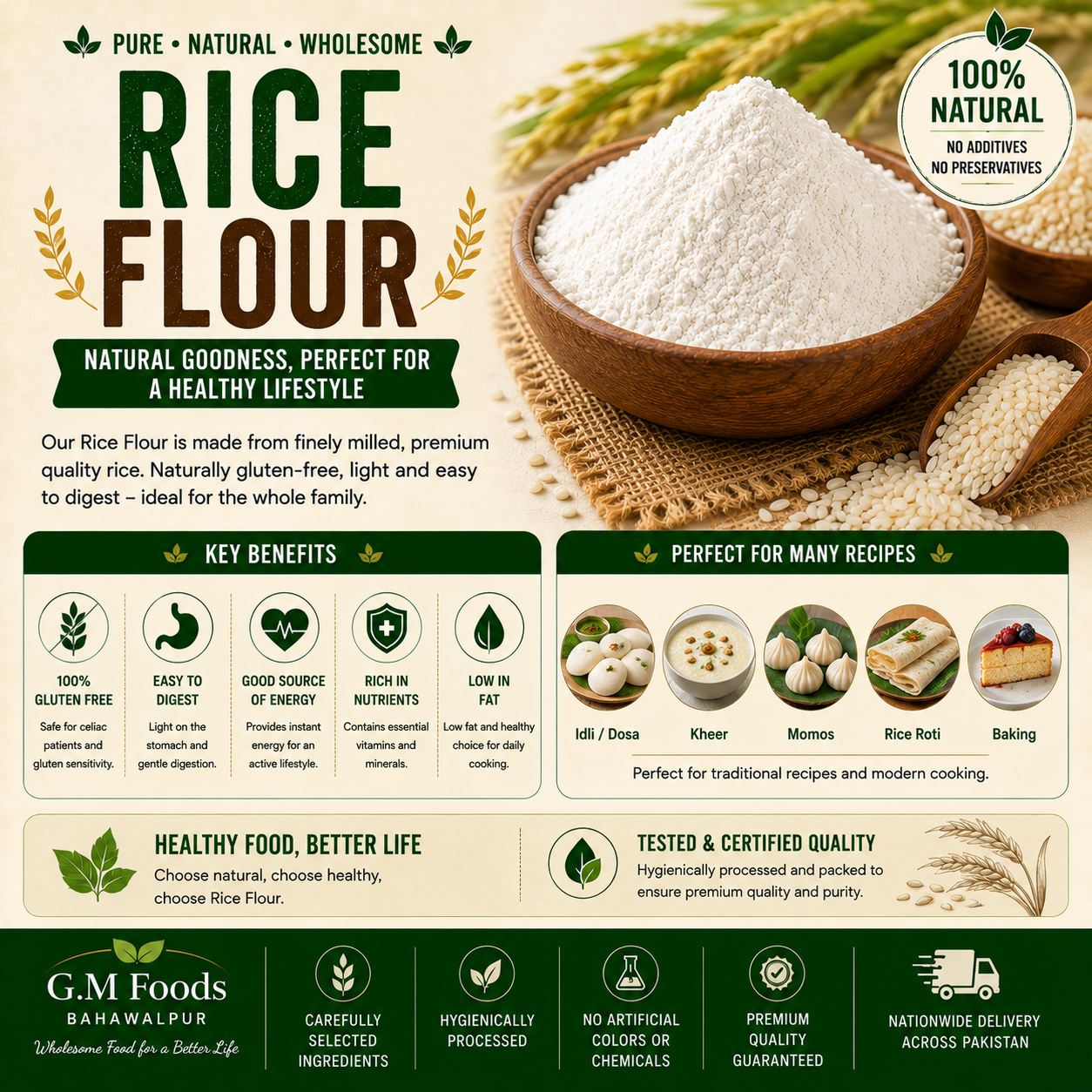
- Naturally gluten-free – safe for celiac disease and gluten sensitivity
- Easily digestible – gentle on the stomach, often recommended during digestive recovery
- Low in fat – a lean carbohydrate source compared to many other flours
- Brown rice flour specifically – offers more fiber, B vitamins, and minerals than the white variant due to retained bran and germ
Common Uses of Rice Flour in Pakistani Cooking
Rice flour is far more versatile than most people realize:
- Crispy coatings – used to make pakoras, samosas, and fried snacks extra crispy
- Thickening agent – added to curries, gravies, and soups for a smooth consistency
- Traditional sweets – a base ingredient in many South Asian desserts and snacks
- Gluten-free baking – often blended with other gluten-free flours to create bread, cakes, and cookies
- Batters – used in dosa-style batters and various fritters for a light, crisp texture
- Rice flour roti – an option for those following a completely gluten-free diet, though usually blended with binding agents for better texture
Why Rice Flour Works Well for Gluten-Free Cooking
Since rice flour has no gluten of its own, it is often used as a base in gluten-free flour blends alongside binding ingredients like tapioca, xanthan gum, or psyllium husk to compensate for the elasticity that gluten would normally provide. On its own, rice flour tends to produce a more crumbly texture, which is why it works best in recipes designed around it, like crispy coatings, or in combination blends for baking and roti.
How to Choose Quality Rice Flour
When buying rice flour, look for:
- Clean, uniform texture without lumps or visible impurities
- Proper packaging that protects against moisture, since rice flour can absorb humidity and clump
- Hygienic processing certification, confirming the flour was milled and packed under verified food safety standards
- Freshness, since rice flour, especially brown rice flour, can develop a slightly rancid smell if stored too long due to natural oils in the bran
Storage Tips for Rice Flour
- Store in an airtight container to prevent moisture absorption and clumping
- Keep in a cool, dry place away from direct sunlight
- Brown rice flour has a shorter shelf life than white rice flour due to its oil content, buy in quantities you will use within a few months
- Refrigeration can extend shelf life, particularly in hot and humid climates
Choosing a Trusted Rice Flour Brand in Pakistan
Since rice flour is used in both everyday cooking and specialized gluten-free diets, quality and hygiene matter more than they might seem. Prioritize brands that:
- Are transparent about whether the flour is white or brown rice based
- Hold recognized food safety certification
- Package the product to protect against moisture and contamination
- Have genuine customer reviews confirming consistent texture and freshness
GM Foods Bahawalpur’s Rice Flour is processed and packed under Punjab Food Authority certification, offering a clean, reliable option for both traditional Pakistani recipes and gluten-free cooking needs.
Frequently Asked Questions
Is rice flour the same as rice starch? No. Rice flour is made from the whole ground rice grain, while rice starch is extracted specifically from the starchy component and has a different texture and use, typically for thickening rather than baking.
Can rice flour replace wheat flour in all recipes? Not directly. Since it lacks gluten, it behaves differently in baking and roti-making. It works best in recipes specifically designed for it or blended with binding agents.
Is rice flour good for weight management? It can be part of a balanced diet, particularly brown rice flour due to its higher fiber content, but portion control and overall diet still matter most.
Does rice flour go bad? Yes, especially brown rice flour, due to natural oils in the bran layer. Proper airtight storage in a cool, dry place helps extend freshness.
This article is for general informational purposes. Please consult a nutritionist or doctor for advice specific to your dietary needs.