
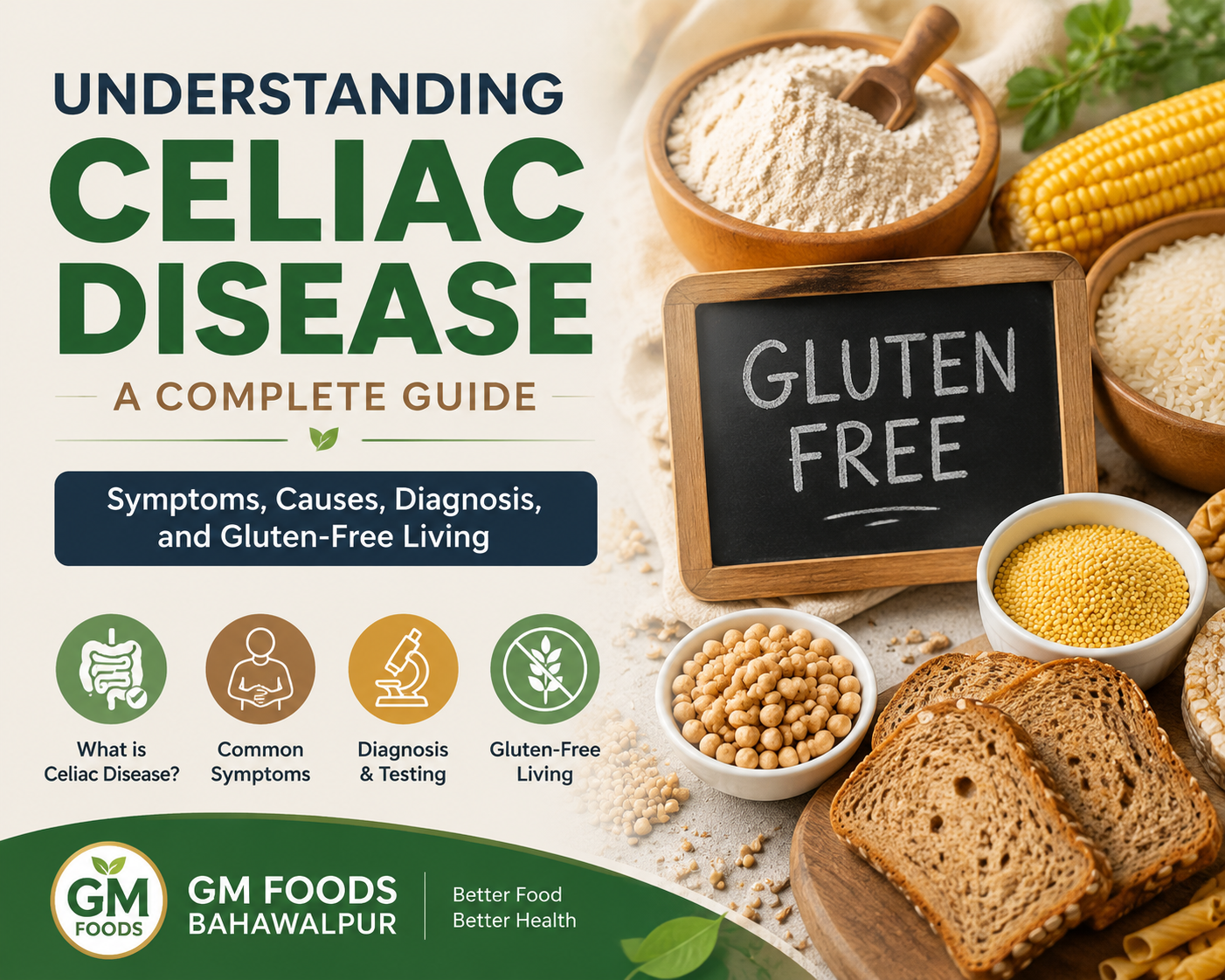
Celiac disease is a chronic autoimmune disorder in which the immune system reacts to gluten, a protein found in wheat, barley, and rye. This reaction damages the lining of the small intestine, reducing the body’s ability to absorb essential nutrients.
Early diagnosis is important because untreated celiac disease can lead to serious health complications, including malnutrition, anemia, osteoporosis, infertility, and an increased risk of certain autoimmune conditions.
You should speak with your healthcare provider if you experience one or more of the following symptoms:
Many people with celiac disease have symptoms outside the digestive system, including:
Children with celiac disease may show different signs than adults, such as:
Parents should consult a pediatrician if these symptoms persist.
If a first-degree relative (parent, sibling, or child) has celiac disease, your risk is significantly higher than that of the general population.
Even if you have no symptoms, your doctor may recommend screening.
Testing may also be recommended for people with:
Diagnosis usually begins with a review of your medical history and symptoms.
Your doctor may recommend the following blood tests:
If blood tests suggest celiac disease, an upper endoscopy with a small intestinal biopsy may be recommended to confirm the diagnosis.
Many people start a gluten-free diet before seeing a doctor. However, this can lead to false-negative test results.
Continue eating foods containing gluten until all recommended testing has been completed, unless your healthcare provider advises otherwise.
Schedule an appointment if you:
No. Similar symptoms can also be caused by:
Only a qualified healthcare professional can diagnose celiac disease through appropriate testing.
There is currently no cure. The only effective treatment is a strict, lifelong gluten-free diet.
No. Testing is generally recommended for individuals with symptoms, risk factors, or a family history of the disease.
Blood tests are the first step, but many people require an intestinal biopsy to confirm the diagnosis.
Recognizing the symptoms of celiac disease and getting tested early can help prevent long-term complications and improve your quality of life. If you suspect you may have celiac disease, consult your healthcare provider rather than self-diagnosing or starting a gluten-free diet on your own.
GM Foods Bahawalpur is committed to raising awareness about celiac disease and promoting healthier lifestyles through quality gluten-free food products designed to support individuals living with gluten-related disorders.