Besan (Gram Flour) in Pakistan: Benefits, Uses, and Buying Guide
Besan, or gram flour, is one of the most versatile ingredients in the Pakistani kitchen, showing up in everything from crispy pakoras to traditional sweets and even homemade skincare. Despite being a daily staple, many households know surprisingly little about what makes it nutritionally valuable or how to judge good quality. This guide covers everything worth knowing about besan.
What Is Besan?
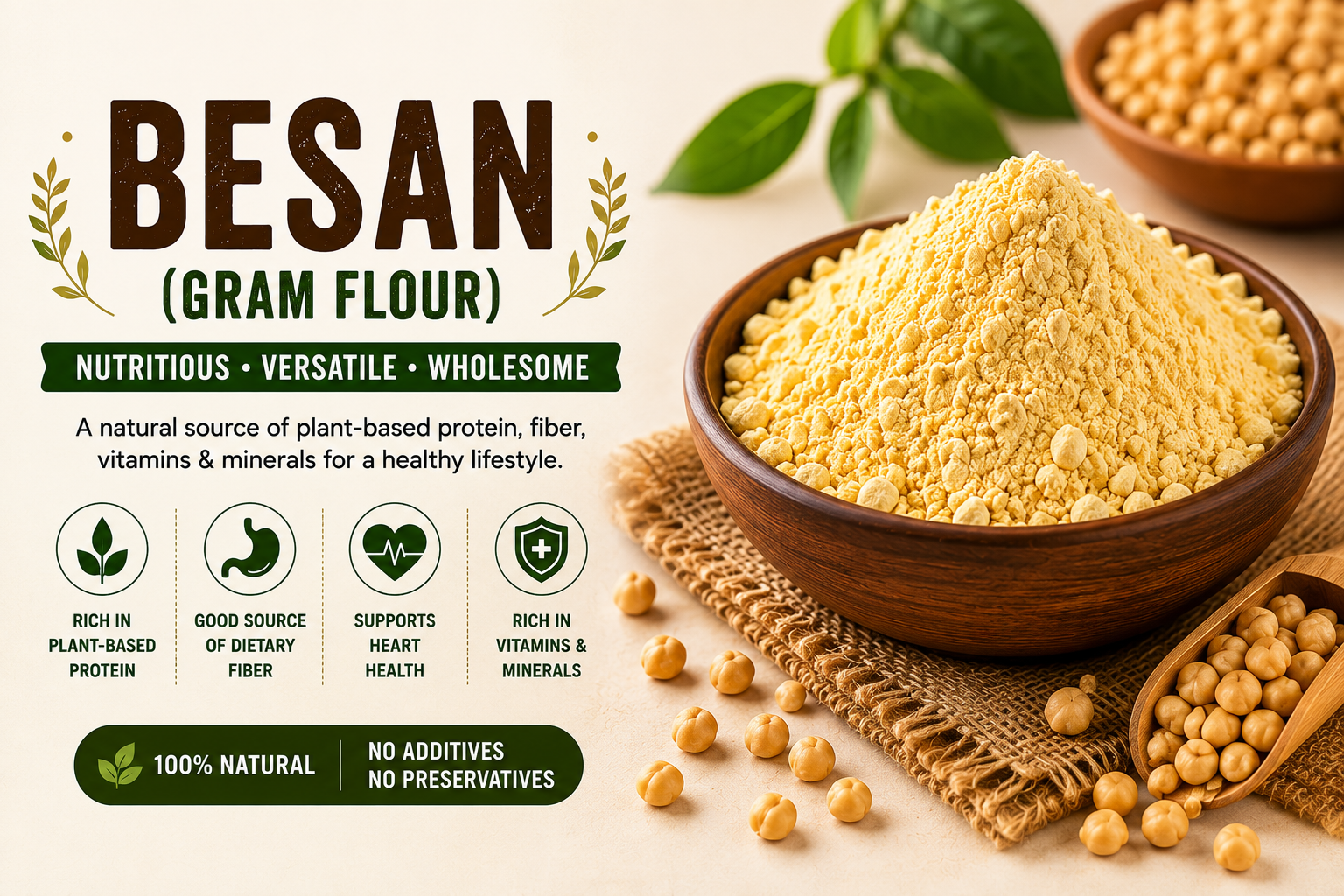
Besan is made by grinding dried chickpeas (chana dal), specifically the split, skinned variety, into a fine powder. It has a slightly nutty, earthy flavor and a pale yellow color, and it is naturally gluten-free since it comes from legumes rather than wheat or other gluten-containing grains.
Nutritional Profile of Besan
- High in plant-based protein – one of the richer protein sources among common flours
- Naturally gluten-free – suitable for people with celiac disease or gluten sensitivity
- Rich in dietary fiber – supports digestion and helps maintain steady blood sugar levels
- Good source of folate – an important B vitamin, particularly relevant during pregnancy
- Contains iron and magnesium – minerals important for energy metabolism and overall health
- Lower glycemic index – compared to refined wheat flour, meaning a gentler impact on blood sugar
Health Benefits of Besan
- Blood sugar management – the combination of protein and fiber slows glucose absorption, making it a useful addition for people managing blood sugar levels
- Weight management support – protein and fiber together promote satiety, helping control appetite and portion sizes
- Muscle and tissue health – as a solid plant protein source, it contributes to daily protein needs, useful for vegetarian diets
- Digestive health – fiber content supports regular digestion
- Heart health support – studies on chickpea-based flours suggest potential benefits for cholesterol management as part of a balanced diet
Common Uses of Besan in Pakistani Cooking
- Pakoras and fritters – the most iconic use, creating the crispy batter for vegetable and other fried snacks
- Besan ki roti – a traditional flatbread, often blended with wheat flour for better texture
- Kadhi – a yogurt-based curry thickened and flavored with besan
- Sweets – used as a base in traditional desserts like besan ki barfi and laddu
- Batters and coatings – used to bind and coat vegetables or meats before frying
- Thickening agent – added in small quantities to soups and gravies
Besan Beyond the Kitchen: Traditional Skincare Use
Besan has a long history of use in South Asian beauty routines, often mixed with turmeric, yogurt, or milk to create a traditional face and body mask (ubtan). While this is a cultural practice rather than a medically verified treatment, many households continue to use it as part of traditional skincare, valued for its gentle exfoliating texture.
Why Besan Works Well for Vegetarian and Diabetic Diets
Since besan is naturally high in protein and fiber while being lower on the glycemic index than refined wheat flour, it is often recommended as part of vegetarian diets looking for reliable plant protein sources, and diabetic-friendly diets looking to manage blood sugar more effectively without giving up flavorful, familiar dishes.
What to Look For When Buying Besan
- Fine, uniform texture – without lumps or visible impurities
- Fresh, natural color – a pale yellow tone without dullness or discoloration, which can indicate age or poor storage
- Hygienic processing certification – confirming the flour was milled and packed under verified food safety standards
- Proper packaging – protecting against moisture, which can cause clumping and spoilage
- No unusual smell – besan should have a mild, nutty aroma, not a musty or rancid one
Storage Tips for Besan
- Store in an airtight container to prevent moisture absorption and pest exposure
- Keep in a cool, dry place away from direct sunlight and heat
- Because besan contains natural oils from the chickpea, buy in quantities that will be used within a few months for the best flavor
- Refrigeration can help extend shelf life, particularly in hot and humid climates
How to Get the Best Results When Cooking With Besan
- Sift besan before mixing into batters to avoid lumps, especially for smooth pakora batter or kadhi
- Roast besan lightly in a dry pan before using in sweets like laddu, this removes the raw taste and deepens the flavor
- For besan ki roti, blend with wheat flour in a ratio that suits your taste, since besan alone can be crumbly without wheat’s natural elasticity
- Whisk besan thoroughly into liquid before heating when making kadhi, to prevent lumps from forming during cooking
Choosing a Trusted Besan Brand in Pakistan
Since freshness and grinding quality directly affect both taste and cooking results, prioritize brands that:
- Use quality chana dal as the base ingredient
- Hold recognized food safety certification
- Package the product to protect against moisture and preserve freshness
- Have genuine customer reviews confirming consistent texture, color, and taste
GM Foods Bahawalpur’s Besan (Gram Flour) is milled from quality chana dal and hygienically packed under Punjab Food Authority certification, offering a reliable option for everyday cooking, traditional sweets, and diabetic-friendly meal planning.
Frequently Asked Questions
Is besan the same as chickpea flour sold internationally? Yes, besan is the South Asian name for what is often labeled chickpea flour or gram flour in other markets, both are made from ground chana dal.
Is besan good for diabetics? Its high protein and fiber content give it a lower glycemic impact compared to refined wheat flour, making it a reasonable addition to a diabetic-friendly diet, though it should be part of a broader plan discussed with a doctor or nutritionist.
Can besan be used on its own for roti? It is possible but produces a crumblier texture since it lacks wheat’s natural elasticity. Most households blend it with wheat flour for a softer, more pliable roti.
Why does besan sometimes taste raw or bitter in sweets? This usually happens when besan is not roasted properly before use. Lightly dry-roasting it removes the raw flavor and improves the taste of dishes like laddu and barfi.
This article is for general informational purposes. Please consult a nutritionist or doctor for advice specific to your dietary needs.